
History · Essay · The Weekly, No. 5
Did WWI Fundamentally Transform Conceptions of Masculinity?
A British Perspective.
Rob D'Evelyn · 5 September 2026
5 September 2026
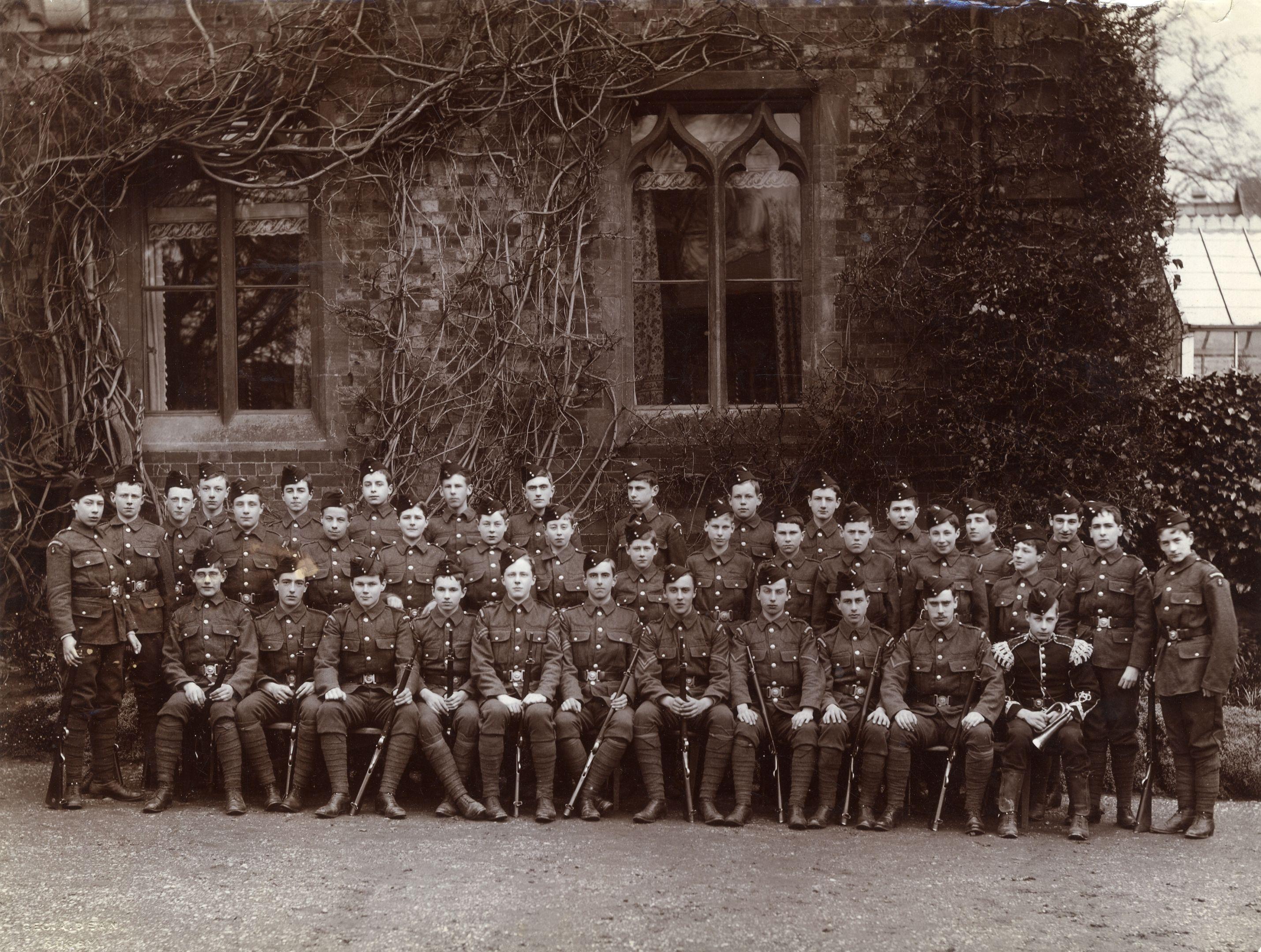
The experiences of the First World War challenged and transformed, to a degree, the conceptions of masculinity held throughout Europe. To evaluate the extent of this change, one must define the conceptions of masculinity prior to the First World War, and contrast this with the narrowing of masculinity brought about by the War. In evaluating the nature and extent of the shift in conceptions of masculinity, I shall primarily be focused on Britain. The study of masculinities has been an increasingly relevant field in history; I intend to explore the intersection with war, still a sparse field of investigation. Whilst the conceptions of masculinity found across Europe bore unifying features, imperialism specifically shaped the shifting masculine idea in Victorian and post-war Britain, with the glorification and idealisation of empire promoting a rigid model of masculinity inextricable from the military and its hierarchy.
With this in mind, we can define pre-First World War masculinity as a social concept, encompassing expectations of honour, selflessness, courage, resilience, and physical ability. From this, we can deduce the foremost reason for the ‘crisis’ into which masculinity was thrust. Such expectations, rigidly reinforced, were undermined by the trauma caused to the generation of men raised to embody these expectations. This conflict was further exacerbated by the shifting role of women, who during wartime took on traditionally masculine, physical roles, with the resilience and strength expected of their male counterparts.
Thus, I will argue that the First World War challenged British notions of masculinity on a fundamental level, changing both how men perceived themselves as individuals, as well as how masculinity as a societal category was understood. Wartime trauma acted as the central catalyst for changing notions of masculinity. This forced men to confront what it meant to be male, with expectations simultaneously upheld by societal pressures, exacerbated by the wartime effort and propaganda, and shattered by the effects of trauma, often likened to Victorian female hysteria. Whilst the masculine social role remained largely the same immediately prior to and following the First World War, with the role of head of the household retaining values of duty and honour, the trauma of industrial-scale violence had an undeniable impact on the perception of masculinity in relation to courage, violence, and vulnerability.
To establish the framework for shifting notions of masculinity, we first must define the pre-First World War conceptions of masculinity. Victorian notions of masculinity were largely grounded in imperialism, particularly approaching the ‘fin de siecle’. As Tosh notes, domesticity was central to earlier Victorian conceptions of masculinity; in contrast, we might identify the main facets of masculinity moving into the 20th century as overwhelmingly physical and imperial in nature. Tozer defines the shift as from ‘godliness and good learning’ to ‘empire’ and ‘service’. Further, we see that this definition was shaped in reaction to evolving notions of femininity. With the ‘fin de siecle’ came the increasingly autonomous, educated, middle and upper-class ‘new woman’; thus, Davidoff suggests that the ‘renewed emphasis’ on masculine military values leading up to the War was partly a reaction to the shifting role of women.
Therefore, we see that the militarisation of masculinity was not a radical transformation that came with the First World War. It had already been established in the face of a declining Empire, and realised through emphasis on physical readiness, duty, resilience and courage. These values were set as an ideal through public school games, instilling these expectations of masculinity into middle and upper-class youth. This is seen in Newbolt's poem, Vitai Lampada, popular during the War; it glorifies continuing ‘playing the game’ on the battlefield, even in the face of death, even whilst ‘England’s far and honour a name’. These notions were internalised subconsciously, and utilised consciously; A recruitment poster issued in Australia played on Vitai Lampada, drawing on the camaraderie and masculinity of team sport to recruit through the Sportsmen's Thousand campaign. The war, thus, served as the ideal opportunity to ‘test’ the masculinity of a new generation; Britain had not seen a major war for a century. As E.M Forster later noted, the training of this generation led to ‘well-developed bodies…and underdeveloped hearts’, seen in the collapse of the masculine ideal under the weight of the War effort.
By 1914, military associations with masculinity were deeply entrenched. We can see the dissonance between the earlier, more expansive Victorian ideal, and the militarised conceptions in the run-up to the Great War, in a telling letter from Cyril Holland. He declared that he “must be a man”, and so equated this to asking for “nothing better [than] to end in honourable battle for my King and Country”. In doing so, he disregarded the “cry of decadent artist, of effeminate aesthete, of weak-kneed degenerate”; such associations fundamentally divorced from the masculine, more characteristic of the Victorian household. Cyril went on to fulfil his wish of masculine honour and duty; he was killed in action in 1915.
Propaganda, utilising masculine imagery, reinforced the framework for the ideal of masculinity in public consciousness, which would come to be shattered when it became almost impossible, on the home front, to sustain morale through the glorified vision of war. One of the most recognisable pieces of propaganda demonstrating just how central masculinity was to the war effort pictured a daughter, asking, ‘Daddy, what did YOU do in the Great War?’. From this, we might gather that the father pictured was only deemed suitable for the role of the father – and thus, the Victorian standards of the protector and provider – if he had prior asserted his masculine role through battle.
The horrors of such battles, however, swiftly became all too clear, with the return of masses of men struck with psychological symptoms, or so physically broken that they could not fight. Showalter argued that, owing to this, the war ‘was a crisis of masculinity and a trial of the Victorian masculine ideal’. Thus, the dissonance between expectations, both of the men in the trenches and for those at home, and reality, shook the rigid, idealistic societal conceptions of masculinity at the foundations. We might take Brooke’s The Soldier as an example; as Cyril did, Brooke sought to shed his own associations with the ‘decadent artist’ set, and thus sought to become the masculine ideal, willing to die courageously for England. Brooke did not fulfil this aspiration, as he died of blood poisoning before he could see combat; this did not, however, detract from the impact that his image had on public conceptions of masculinity. Figures such as Churchill eulogised his embodiment of the masculine ideal, claiming that Brooke represented the ‘nobility’ of youth, and ‘express[ed] their thoughts of self-surrender’. He swiftly became a symbol of both a pre-war innocence, and a fervent patriotism and self-sacrifice, arguably crucial to sustaining the masculine ideal in wartime Britain.
In Brooke's popular idealisation of wartime, it could be argued, lies the key to the transformation of masculinity in the public eye. His romanticised vision of wartime overshadowed what was closer to reality for soldiers at the front; his bleak, unheroic death. The work of poet contemporary, Wilfred Owen, is a startling contrast. A pacifist, who repurposed the sentiment dulce et decorum est, pro patria mori to denounce the romanticisation of self-sacrifice in a war he deemed futile, Owen was deemed the very opposite of Brooke; dishonourable and cowardly, retreating from the front due to shell-shock. His death, however, demonstrates the masculine ideal that Brooke could never quite obtain; he was killed crossing the Sambre–Oise Canal in Northern France a week before Armistice Day.
This highlights the contrast in which, having been grounded in and trained in the romantic, patriotic ideal of resilience, self-sacrifice and duty, a generation of boys faced the horrific realities of war at the front. This left Britain to confront what many saw as masculinity in crisis, with the ideal of courage and physicality damaged by the mental and physical trauma of soldiers. Braudy suggests that a state of peacetime allows ‘different masculinities’ to be ‘indulged’ in, but asserts that ‘masculinity [is] the core of national cohesiveness’, and so is emphasised during periods of wartime, which require mass mobilisation against common enemy forces. Thus, when the deeply entrenched associations of masculinity – the ideal soldier being patriotic, courageous, and resilient – were shattered by a sudden flood of men deemed unfit to return to the front, coupled with the lack of knowledge surrounding the impact of war on the mental states of the soldier, a perceived ‘crisis’ emerged.
Tosh identified a ‘hegemonic masculinity’ of the period, rigid and moral in content; to be a man was to meet such expectations of duty, honour, and physicality. Whilst this empowered groups of men, in this case those fulfilling their duty and fighting, it equally emasculated and alienated men who were seen to have failed in living up to the masculine ideal.
Perhaps, therefore, the principal catalyst for the jolting disparity between idealised wartime experience and reality was the phenomenon of ‘shell-shock’, coined in 1915 by Charles Myers, denoting a range of symptoms from psychological trauma. Both physical and mental injuries endured on the front were often perceived as emasculating, associated with excuses to avoid serving, underpinned by the absence of knowledge necessary to explain the phenomenon. Shell-shock was initially equated solely with physical trauma; therefore, it was widely considered a legitimate injury, justifying withdrawing from fighting. However, following reports of mental symptoms with no associated physical trauma, shell-shock came to be regarded as moral weakness. Myers himself believed that shell-shock indicated a ‘lack of discipline and loyalty’. In her landmark study, Showalter asserted that the experiences of the trenches ‘feminised’ men, with powerlessness and trauma conflicting with masculine expectations, and within the clash of the ideal and reality lay the catalyst for shell-shock. Showalter further argued that shell-shock was ‘a disguised male protest not only against the war’ but against ‘the concept of “manliness” itself.’ Whilst such conclusions are widely disputed, with the direct cause of shell-shock now widely held to be the physical and psychological trauma of the front, social conflict was undoubtedly central to the issue, with men suffering from shell-shock under intense scrutiny, largely seen as emasculated by it. Such a threat to masculinity posed a risk to authorities' efforts to maintain morale. In 1917, shell-shock was banned as a diagnosis in the British Army, and any mention of it to the newspapers likewise forbidden. This illustrates the extent to which the illness was deemed an excuse for getting out of fighting in the national interest, and so seen as rooted in unmasculine fear, selfishness and cowardice.
The emasculation of men by shell-shock diagnoses influenced the treatment of patients by clinicians. In 1918, Lewis Yealland argued that shell-shock required harsh treatment, being a moral failure of masculinity, and thus soldiers must be restored to their former selves. We can further see the belief that not fighting was a profound form of emasculation in the consequences faced for ‘desertion’. It was equally believed that heavy sanctions must be enforced, to uphold discipline and duty. In September 1916, Harry Farr was charged with ‘cowardice’ following desertion immediately prior to his move to the Somme. Farr had been treated for shell-shock in 1915. At his court martial, he gave his reason as ‘feeling better’ when he was away from the shell fire. On the 18th October 1916, Farr was one of 18 men executed after being found guilty of cowardice from 1914 - 1918.
A further aspect of the role of the front in transforming conceptions of masculinity that must be acknowledged is the lack of female presence on the front. With no women to fulfil maternal or romantic roles, soldiers were forced to do so, further challenging Tosh’s concept of hegemonic masculinity. This can be argued to be one source of psychological conflict, doing so whilst striving to fulfil the masculine roles proscribed to them. As women occupied the societally male role, they found themselves requiring strength, and so demonstrated qualities inextricably associated with masculinity. Thus, gender roles were reinforced to prevent women taking on wholly masculine roles. Although, therefore, wartime Britain underwent somewhat of a transformation of gender roles, driven by necessity, peacetime saw the return of traditional societal roles. The soldier effectively became the baseline against which masculinity was measured.
When men failed to meet these rigid expectations, shame was felt internally and perpetuated externally. The Parliamentary Recruiting Committee, it might be argued, played a significant role on the home front in reinforcing shame, equating non-fighting with effeminacy. One propaganda piece, encouraging civilians to ‘STEP INTO YOUR PLACE’, evokes Tosh’s notion of a ‘hegemonic masculinity’ during this period; it depicts men of various occupations assimilating into identical infantrymen, suggesting this was the only way for men to occupy the role of masculinity.
The ‘white feather’ campaign, beginning in 1914, further demonstrates the extent to which shame was perpetuated externally. The campaign consisted of women in Britain handing men of military age white feathers, publicly emasculating them for evading their military duty. Narrowed gender roles played a central role in encouraging conscription, with men pushed to establish their masculinity through defending both the nation and the femininity of the women at home. The campaign’s effective reversal of gender roles, with women assuming the role of aggressors, only served to reinforce the strictures of masculinity further. Though formulated to encourage men to join up through the use of guilt tactics, the campaign arguably backfired. A consequence was the humiliation of men who had fought, such as the case of George Samson, who was handed a white feather after being awarded the Victoria Cross medal for bravery. To prevent misidentification, the authorities provided soldiers at home with exemption badges, or armbands, designating them as part of the ‘hegemonic masculinity’ encapsulated in their uniforms, functioning as an external expression of the masculinity forged through fighting.
Men, however, returned to find that a post-WWI society had no room for those broken physically or mentally by warfare. Women had gained agency, and those who had fought and suffered psychologically were deliberately sidelined and often struggled to integrate back into society, due to a lack of state support. Whilst the social role of men underwent very little change as a consequence of the Great War, Victorian preconceptions of imperial masculinity were, to some extent, reimagined, in order to mobilise a generation of men to fight, as the militarised championing of masculine values. This had the unintended consequence of mass forced emasculation in the form of both mental and physical injury.
Therefore, it is arguable that conceptions of masculinity in Europe, specifically Britain, emerged from the First World War fundamentally transformed. The rigidities of masculinity were reinforced, as a reaction to the vulnerabilities threatening the masculine ideal as a result of the trauma of warfare. Imperial associations of masculinity in Victorian Britain were made inextricable with masculine identity, reinforcing values of physicality, strength, courage and selflessness. However, simultaneously, Britain was forced to grapple with the strain of mental trauma undermining these values, widening societal conceptions of masculinity.
Bibliography
Tosh, John. A Man’s Place : Masculinity and the Middle-Class Home in Victorian England. New Haven ; London: Yale University Press, 2007.
Tozer, Malcolm David William. “Manliness: The Evolution of a Victorian Ideal.” University of Leicester, 1978. https://hdl.handle.net/2381/10370.
Davidoff, Leonore, and Catherine Hall. Family Fortunes. Routledge, 2018. https://doi.org/10.4324/9781315157610.
Newbolt, Henry John. Admirals All. John Lane, New York, 1898.
Keitch, Charlie. “First World War Recruitment Posters.” Imperial War Museums. Imperial War Museums, December 7, 2017. https://www.iwm.org.uk/learning/resources/first-world-war-recruitment-posters.
Fussell, Paul. The Great War and Modern Memory. London: Oxford University Press, 1975.
Forster, E. M. “Notes on the English Character.” The Atlantic, January 1, 1926. https://www.theatlantic.com/magazine/archive/1926/01/notes-on-the-english-character/648361/.
Sinfield, Alan. The Wilde Century : Effeminacy, Oscar Wilde, and the Queer Moment. London: Cassell, 1994.
Lumley, John Savile. ‘Daddy, What Did You Do in the Great War?’. Imperial War Museums, 1915. https://www.iwm.org.uk/collections/item/object/17053.
Showalter, Elaine. The Female Malady. London: Virago Press, 1985.
Brigham Young University. “Rupert Brooke’s Obituary in The Times | Anthem for Doomed Youth | HBLL.” exhibits.lib.byu.edu, 1998. https://exhibits.lib.byu.edu/wwi/poets/rbobituary.html.
Liverpool University Press. “Rupert Brooke in the First World War – 5 Minutes with Alisa Miller.” Liverpool University Press Blog, August 30, 2018. https://liverpooluniversitypress.blog/2018/08/30/rupert-brooke-in-the-first-world-war-5-minutes-with-alisa-miller/.
Leo Braudy, From Chivalry to Terrorism : War and the Changing Nature of Masculinity (New York: Vintage Books, 2003).
Stefan Dudink, Karen Hagemann, and John Tosh, Masculinities in Politics and War: Gendering Modern History (Manchester ; New York: Manchester University Press, 2004), chap. 3.
Myers, Charles S. “A Contribution to the Study of Shell Shock.” The Lancet 185, no. 4772 (February 1915): 316–20. https://doi.org/10.1016/s0140-6736(00)52916-x.
Myers, “Shell Shock”. 316–20
Showalter, Female Malady, 171.
Jones, Edgar, Nicola T. Fear, and Simon Wessely. “Shell Shock and Mild Traumatic Brain Injury: A Historical Review.” American Journal of Psychiatry 164, no. 11 (November 2007): 1641–45. https://doi.org/10.1176/appi.ajp.2007.07071180.
Lewis Ralph Yealland. Hysterical Disorders of Warfare. London: Macmillan And Co., Limited, 1918.
Wessely, Simon. “The Life and Death of Private Harry Farr.” Journal of the Royal Society of Medicine 99, no. 9 (September 2006): 440–43. https://doi.org/10.1177/014107680609900913.
Museum, Victoria and Albert. “Step into Your Place | Unknown | V&A Explore The Collections.” Victoria and Albert Museum: Explore the Collections, June 30, 2009. https://collections.vam.ac.uk/item/O1035213/step-into-your-place-poster-unknown/.
Gullace, Nicoletta F. “White Feathers and Wounded Men: Female Patriotism and the Memory of the Great War.” Libraryofsocialscience.com, 2025. https://www.libraryofsocialscience.com/essays/gullace-white-feathers/.
Glanfield, John. Bravest of the Brave: The Story of the Victoria Cross. Stroud: Sutton, 2005.

The author
A-Level student in upper sixth, studying history, politics, and english lit.
All work by this author →Read next, in History
- Wait for Me, I'm Gone! Alexandra Jane Patterson
- The Illusion of Reform: How U.S. Presidents from Harding to Roosevelt Shaped — and Dodged — Federal Responsibility, 1921–1941 Alexandra Baily
- Discovering Setsu Koizumi: The Muse “Behind” Lafcadio Hearn Nicholas Parlitsis