
History · Essay · The Weekly, No. 5
Exacerbating Civil War: Foreign Superpowers and a Divided Nation
To what extent were foreign powers were the most significant drivers in the Korean War?
Brad Turland · Adelaide University · 5 September 2026
Adelaide University · 5 September 2026
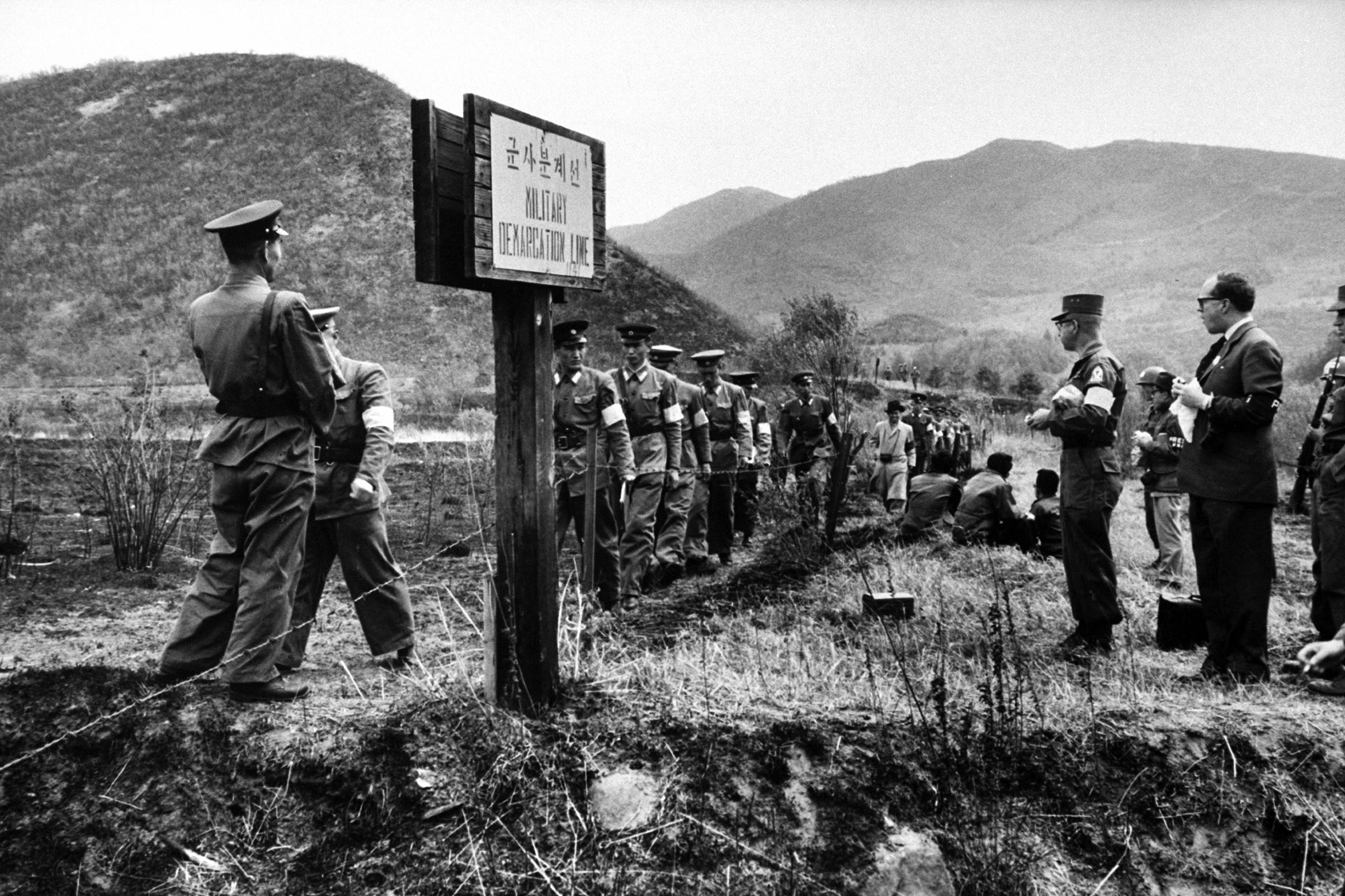
Whilst it is technically ongoing, as no peace treaty was ever signed, the Korean War took place between 1950-1953, and was the most lethal conflict of the Cold War. Only five years after the ending of World War II, it resulted in the death of at least 2.5 million people, and whilst the exact figure is unknown, it was potentially double that., Whilst taking place in the Korean Peninsula, it is often considered a proxy war between the USA/UN and China/Soviet Union, driven by the opposing ideologies of capitalism and communism., The war could never have reached such scale without the involvement of foreign superpowers, and may have never begun at all without their involvement during the post-WW2 period. Thus, it can be argued that these foreign powers were the most significant drivers in the Korean War, to a large extent.
The Korean War would not have occurred if not for the involvement of foreign powers, with colonial rule and subsequent division of Korea significant catalysts to the war., For most of its history, Korea was a unified, independent nation. However, due its geographical location, it was “firmly in the eyeline of bigger powers…[and had] long been coveted by its neighbours”. As a result, colonial expansion threatened Korea, with its eventual annexation by Japan in 1910., Japanese rule over Korea was brutal, with rampant cultural suppression and damage to culturally important sites. As a result, nationalist resistance in Korea split into left- and right-wing factions; ‘underclass’ treatment by the Japanese made the concept of equality appealing, allowing communism to gain traction with covert support from China and the Soviet Union. Meanwhile, many Koreans aspired to democracy, creating a rupture within the nation under the weight of colonial pressures. This colonial impact on political stances indicates that Japan played a significant role in the origins of the Korean War, albeit in a less direct way than other foreign powers.
With Japan’s surrender in WW2, Korea was freed. However, as alliances from WW2 “soon faltered”,, the Cold War began. When Soviet forces began occupying northern Korea, appearing ready to take control of the entire peninsula, the USA, concerned by this development, shifted its focus from Japan back to Korea., A hurried agreement was reached, placing the Soviets in control of the North and the Americans the South, with the dividing line the arbitrary 38th parallel.,,, No consultation with Koreans took place, and whilst now free of colonial rule, their fate was once again determined for them., As these powers “paid lip service” to reunification, their conflicting ideologies and the imposition of these onto the Korean states deepened the divide, ultimately leading to war. This division of Korea played a pivotal role in the origins of the war, reinforcing the argument that foreign powers were the primary drivers of the conflict.
While it is unlikely the war would have occurred without their involvement, the Korean War also could never have escalated to such a large scale without the participation of foreign superpowers, with China and the United Nations also playing significant roles alongside the Soviets and Americans., Support from China and the Soviet Union for North Korea escalated the conflict far beyond possible volumes, especially given the context of nations still recovering from brutal colonial rule, whilst the “peacekeeping force” of UN troops - predominantly American - played a crucial role in South Korea's successes throughout the war, eventually exceeding their initial peacekeeping objectives; in just three years of active warfare, the USA dropped more ordnance on North Korea than was used in the entire Pacific Theatre throughout all of World War II, maintaining “absolute supremacy” in the air throughout the conflict. Conversely, South Korea’s advance into the North became “embarrassing” for Stalin and Mao, prompting an increase in their involvement, which led to renewed Northern offensives and back-and-forth fighting until a “stalemate” by summer 1951. After this point, neither side felt capable of making further progress without resorting to nuclear weaponry, and the all important foreign powers were unwilling to “pour too much [more] blood and treasure into it”. Neither Korean leader was satisfied, but “without their superpower allies, they [were] in no position to make further [significant] assaults”. Whilst armistice talks began in July 1951, fighting continued until 1953, and American aerial bombardment continued at a scale comparable to the Allied bombing of Germany in World War II. Such an extensive scale of foreign involvement in the war clearly indicates that these powers were the primary drivers of the conflict.
Despite the enormous impact of foreign superpowers in the origins and events of the Korean War, the impact of Koreans themselves must still be noted. Even before the war and foreign involvement, around 100,000 Koreans died in border skirmishes, political fighting, and guerilla warfare,, highlighting the deep tensions between both states. Furthermore, both North and South Korea shared a strong desire to reunify the nation as it had historically been. However, neither side’s willingness to compromise, largely due to their deeply held political ideologies, resulted in plans to achieve reunification through force, making war inevitable. Although commonly believed that the Soviet Union supported the invasion, it has been argued that this support was given reluctantly, due to fears of provoking the USA, which had the atomic bomb., The Soviet Union even denied direct responsibility for the invasion, asserting that North Korea had acted independently, later pressuring them for aid. The superior strength of the North Korean army compared to the South was also a significant factor in the war. North Korea's preparation for war was more urgent than the South’s, and whilst Soviet artillery bolstered this advantage, it has been argued that the North's political ideology also boosted morale and effectiveness, with the fight for its socialist nation and a brighter future motivating troops. In contrast, although anti-communist sentiment existed in the South, it did not translate into the same level of morale. These examples demonstrate that, whilst foreign superpowers were immensely influential in the Korean War, the Korean nations themselves exerted considerable influence, challenging the notion that the conflict was merely a proxy war between larger powers.
Thus, foreign powers were indeed the most significant drivers of the Korean War. The involvement of the USA, Soviet Union, China, and UN shaped the conflict's course and scale, making it far more than a civil struggle within Korea, whilst Japan's colonial influence and the post-WW2 division of Korea were key factors in its origin. Whilst Korea’s own impact must not be ignored, the conflict clearly would not have escalated to such a scale without the involvement of foreign powers. In conclusion, whilst the impact of Koreans challenges the common idea that it was solely a proxy war, these powers were undeniably the primary drivers of the conflict, to a large extent.
Bibliography
Burton, K.D. (2020) Cold conflict: The National WWII Museum: New Orleans, The National WWII Museum | New Orleans. Available at: https://www.nationalww2museum.org/war/articles/cold-conflict (Accessed: 24 October 2024).
Galvin L, Dr Miller O, (28 April 2024) ‘The Korean War’, Short History Of., Spotify. https://open.spotify.com/episode/1QRCY7QFF1yg2ETddMtN1K?si=GsbCmevvTv2h-8a6l1f9fw
The Korean War (2018) Nuclear Museum. Available at: https://ahf.nuclearmuseum.org/ahf/history/korean-war/ (Accessed: 24 October 2024).
Matray, J. (2002) Revisiting Korea: Exposing Myths of the Forgotten War, National Archives and Records Administration. Available at: https://www.archives.gov/publications/prologue/2002/summer/korean-myths-1 (Accessed: 24 October 2024).
Matray, J. (2012) The Korean War 101: Causes, course, and conclusion of the conflict, Association for Asian Studies. Available at: https://www.asianstudies.org/publications/eaa/archives/the-korean-war-101-causes-course-and-conclusion-of-the-conflict/ (Accessed: 24 October 2024).
McDougall, W. (2024) The Korean War, Encyclopædia Britannica. Available at: https://www.britannica.com/topic/20th-century-international-relations-2085155/The-Korean-War (Accessed: 24 October 2024).
Multiple perspectives on the Korean War (no date) Korean War Legacy. Available at: https://koreanwarlegacy.org/chapters/multiple-perspectives-on-the-korean-war/ (Accessed: 24 October 2024).
NSC-68 and the Korean War (no date) U.S. Department of State. Available at: https://history.state.gov/departmenthistory/short-history/koreanwar (Accessed: 24 October 2024).
United Nations forces in the Korean War (2022) Anzac Portal. Available at: https://anzacportal.dva.gov.au/wars-and-missions/korean-war-1950-1953/korean-war/armed-forces/united-nations-forces-korean-war (Accessed: 24 October 2024).

The author
Philosophy, Politics, and Economics student, musician, and founder working on early-stage non-profit initiatives through the "Ambrose Institute".
All work by this author →Read next, in History
- Wait for Me, I'm Gone! Alexandra Jane Patterson
- The Illusion of Reform: How U.S. Presidents from Harding to Roosevelt Shaped — and Dodged — Federal Responsibility, 1921–1941 Alexandra Baily
- Discovering Setsu Koizumi: The Muse “Behind” Lafcadio Hearn Nicholas Parlitsis