

Politics · Essay · New this week
Do the 2026 Midterms Suggest Centrism Is the Key to American Political Success?
The results seem to signal the end of MAGA, and the rise of the DSA. Yet, are the real winners the centrists, on both sides of the aisle?
Dillon Kavanagh · University of Bristol · 4 November 2026
University of Bristol · 4 November 2026
The 2026 midterms have been, above all, a verdict on Donald Trump. Across the country, the candidates closest to him lost, while those who moved towards the centre, in both parties, held on or broke through. This raises a question that will shape the race for 2028: is centrism now the key to American political success?
The implosion of “MAGA”
All Republican candidates in this race have been tainted by Trump; the midterms as a whole have acted as a referendum on the performance of the President. Yet no group has been affected more by Trump than the candidates who are MAGA-aligned and thus closer to Trump personally and ideologically. In the Texas Senate race, Ken Paxton (R.) was handpicked by Trump himself, as the President preferred him to the incumbent Cornyn (R.) and endorsed Paxton in the primary. Cornyn, significantly less pro-Trump than Paxton, won this seat with 53% of the vote in 2020. However, along with accusations of scandal, anger at Trump led Paxton to a damning loss to James Talarico (D.). The preacher turned politician ran a terrific campaign just to be considered a candidate in this race, but getting over the line is a reflection of the fall and failure of the MAGA movement.
In this cycle, there has been a theme of the Republican primary candidates most supportive of Trump being helped personally by the President, yet this close connection seems only useful to get their name on the ballot, not to win the election itself. Darline Graham (R.) is a prime example. The sister of the late long-serving Senator Lindsey Graham (R.), she was chosen by Trump despite concerns over her lack of experience for the role. These concerns came to fruition as she lost to Annie Andrews (D.).
It is not just those whom the President personally favours who came up short; the biggest and most vocal supporters of the President also had a terrible night. Vivek Ramaswamy (R.) rose to fame as an ever-loyal defender of Trump in the 2024 Republican presidential primary. Rewarded with the chance to become Governor of Ohio, he was defeated by Amy Acton (D.), the first Democrat elected Governor of Ohio in two decades.
Overall, I think this midterm showed us something about the MAGA movement that has been obvious from the outside for a while: this “new” brand of politics is just one man. If Trump does well, so do they; if not, they fall upon the same sword. The importance of this cycle, though, is that it may now dawn upon the Republican establishment that MAGA is not sustainable. Trump will not be a candidate or a sitting President at the time of an election again, and if there was any fluttering hope of a Trump-legacy party, the citizens of America have made themselves resoundingly clear: they do not want it.
So did moderates perform better?
Yes, but it is a low bar. Moderates in the current Republican party are walking a difficult tightrope. They know that MAGA politics isn’t electable anymore, so they crawl slowly to the centre to win swing voters, yet if they run too fast the loyal Trumpians, who vote every time, rain or shine, will desert them. I’ve looked at three races, and the candidates walked the tightrope with varying success.
Susan Collins (R.) was the least successful this time round. After 30 years as a Republican Senator in a blue state, it could be argued that she is an excellent tightrope walker, the most acrobatic politician in DC. However, the political climate is too polarised at the moment, and she couldn’t pull off the impressive victories she normally does. She failed to distance herself effectively from Trump and lost to Troy Jackson (D.).
Secondly, Steve Hilton (R.) ran for Governor of California. He was in good company: film stars such as Reagan and Schwarzenegger had previously become governor on the Republican ticket. Hilton’s background is less exciting; he is a former Fox News host and adviser to David Cameron. Interestingly, when working for Cameron, he was seen as more of an environmentalist and a supporter of same-sex marriage, so he is not the typical Republican. He ran a campaign that included “Dinner with Democrats”, and his willingness to show bipartisanship is exactly what I’d expect from a successful tightrope walk. However, the task of taking California was too big, and I don’t think anyone truly expected him to succeed.
Maybe in this political climate the tightrope is just impossible, too thin to walk across? But wait! Ashley Moody (R.) has crossed it. With less of the flair of a circus performer, Moody managed to win the Senate seat in Florida. Of the 14 key Senate races that CNN listed, Florida was the only one won by a Republican, so it is a commendable feat. She isn’t too closely associated with Trump and can be viewed as a moderate, but she also didn’t scare away hardcore Trumpians in the President’s home state. Hilton’s campaign and Moody’s victory will give hope to moderate Republicans, the Tillis and Romney types, that the party could return to a more centre-right approach, and win with it.
DSA en route to the White House?
The Democratic Socialists of America have been the name on the lips of many young Democratic voters, while older establishment Democrats are more sceptical. However, the results of the midterms strengthen their position immensely. The hopes and future of this wing have always seemed to centre on one woman, Alexandria Ocasio-Cortez (D.). She is deeply popular in New York City, and she increased her own vote share by around 10 points, solidifying her status as the unappointed patron of the movement.
A new face to burst onto the scene, though, is Abdul El-Sayed (D.). The race in Michigan has been fascinating to watch from start to finish. El-Sayed ran an effective campaign, although at times it felt as if he was being targeted by Democrats and Republicans alike, notably through the unhelpful endorsement of his opponent by Haley Stevens (D.), whom he beat in the primary. Although El-Sayed’s DSA links aren’t crystal clear, the GOP’s relentless rhetoric that he is a socialist meant that people went to the polls voting for El-Sayed because they heard he was a socialist, or not voting for him because of that same fact. He was painted as the DSA’s poster boy, and it won.
That is what I think is most important: it is no longer a label that many Democratic candidates try to distance themselves from, but one that many are accepting and finding actually helps their chances of winning. The important caveat is that the DSA is unproven in rural areas, and the Democrats have always had issues with nationwide candidates who can only perform at an urban level. The most successful modern Democratic candidates, Obama, Bill Clinton and Biden, have always harnessed rural support. For this reason, the DSA has strengthened its faction, but hasn’t got a wide enough reach to be the future of the party.
Is centrism working for the Democrats?
Yes, but there are many reasons this could change. One could argue that if the threat of Trump disappears, more centrist-leaning Republicans will return to their natural home. However, in this election, where the man in the White House and his decisions were the main issue, it worked a treat.
Adam Hamilton (D.) won Kansas. The last time Kansas elected a Democratic Senator was 1932, before Dorothy and Toto immortalised the state in film history. North Carolina, the home of the anti-Trump Republican Thom Tillis, was a moderate conservative state. Roy Cooper (D.) saw this, ran down the centre ground, staked the blue flag and took the result home. His magnificent victory gave the state a Democratic Senator for the first time since 2008. Finally, Rob Sand (D.) became Governor of Iowa, the same Iowa that voted for Trump by 13 points in 2024. Sand ran on decreasing partisanship, holding conversations with both sides of the aisle and coming up with amicable solutions.
These three men ran in red states and came back with historic victories. They all moved closer to the centre, and they all attracted swing voters. For me, that is where the future of the Democratic party has to be if it wants to succeed. It needs to win those people who are deeply angry with what Trump and MAGA have done to America, many of whom feel some anger at themselves because they voted for Trump. They won’t be coaxed or convinced by cussing out anyone who thinks differently, because they once did so themselves. They need to be communicated with and reached out to, and the evidence of a now relatively blue Midwest suggests this is the case.
The midterms have made an impact, but where now?
The fact that Trump has been such a defining issue reflects the importance of the presidency: both parties want it and need it. For the Republicans, it always seemed that their 2028 presidential candidate was somewhere in the administration working closely with Trump, such as Rubio or Vance. However, that would be a continuation of MAGA, and for the reasons I’ve outlined, I believe it would lead to an overwhelming Democratic victory. For this reason, I can imagine a moderate Republican winning the nomination. Although that person is unclear right now, who is to say they haven’t been waiting for the disastrous MAGA midterms to solidify their own position?
For the Democrats, the DSA has some momentum, and I’m sure Ocasio-Cortez would run a competitive campaign. However, if they want the best chance of winning, they will likely stick with a moderate candidate and use these midterms as evidence. Unlike the Republicans, they have plenty lined up: Newsom, Harris, Kelly, Buttigieg, Ossoff and Shapiro. I’m sure one of the big new Democratic victors from these midterms will throw their hat in the ring too; dare I say Talarico or Sand?
Overall, the midterms have changed the factions of American politics for the foreseeable future. They have decimated the hard right of the Republican party, leaving sprinkles of hope for moderate Republicans; they have given a louder voice to a growing DSA; and they have created a moderate machine for winning deep red states.
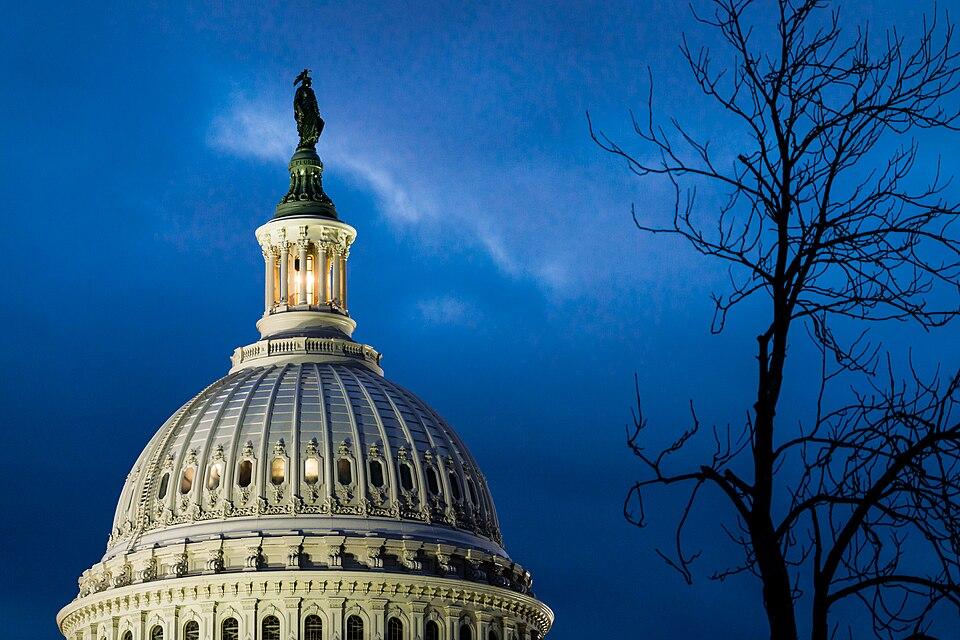
Photo: John Brighenti, CC BY 2.0, via Wikimedia Commons
Bibliography
Associated Press, Live Reporting: 2026 Midterms.
CNN, Election Live Map: Key Senate Races, 2026.
CNN, Live Reporting: 2026 Midterms.
Donaldson, M. (2026). ‘Steve Hilton’. AFP.
Luscombe, R. (2026). ‘Ashley Moody Defeats Progressive Angie Nixon in Florida Senate Race’. The Guardian.
NBC News, Live Election Coverage: 2026 Midterms.
NBC News, Steve Kornacki Livestream: 2026 Midterms.
New York Secretary of State, NY 14th Congressional District Election, 2024.
Pfannenstiel, B. (2026). ‘Who Is Rob Sand?’ Des Moines Register.
Texas Secretary of State, Texas Senate Election, 2020.

The author
Grew up in London, I am now a Classical Studies BA student at the University of Bristol. I am interested in UK, USA and Australian politics. I am particularly focused on elections, campaign strategies and the ideology of specific parties. On the historical side, I am fond of Roman history, especially the fall of the Republic, as well as British and American history.
All work by this author →Read next, in Politics