

Classics · Essay · New this week
The Pompeian Businesswoman: Julia Felix and Women in the Roman Economy
A painted notice on a Pompeian wall names one landlord, and she is a woman. What Julia Felix's baths, shops and frescoes reveal about women in the Roman economy.
Charley Clasby · University of Liverpool · 7 October 2026
University of Liverpool · 7 October 2026
The study of women and their influence in Pompeii is a subject that has changed significantly within the last decade (Longfellow 2025, 5). While the contributions of Eumachia- arguably the most famous Pompeian woman- have been acknowledged (albeit not fully explored) since the beginning of the 20th centaury (Mau 1902, 111), studies into women’s participation and presence in Pompeian society on a more holistic scale, in which they are regarded as integrated members of the wider community, are relatively recent (Longfellow & Swetnam-Burland 2021, 2). It is, mostly, now accepted that women contributed to the Pompeian economy, however the forms that these contributions took varied significantly, and interceded with many other elements both within life in the city and with wider society across the Roman Empire in the period before the eruption in 79CE. Julia Felix was a business owner towards the end of Pompeii's inhabitancy, who owned an estate taking up an entire insula in Pompeii's Regio II, and she ran a number of businesses out of her property. The private baths took up the largest portion of the estate, but she also had shop fronts she rented out, gardens that could be accessed separate from the baths, and rental rooms in the upstairs of her own house. Through studying her use of space, decoration, and overall image it can be shown she was an active and intelligent member of Pompeii's business class, and show how women in cities outside of Rome were able to access the economic sphere on a scale not immediately indicated by traditional understandings of Roman women.
The first thing to establish is the degree of control Julia Felix exercised over her estate. The estate sat on the Via dell’Abbondanza, one of the busiest streets in Pompeii, and featured multiple entrances, including one leading to the Baths, one leading into the Atrium and Gardens, and another to the thermopolium. The most significant feature of the entrances, however, was a painted advertisement on the wall, advertising spaces to rent in the Baths, in adjoined shops, and in the upstairs of the house itself. Crucially, Julia Felix is the only proprietor named in this advertisement, with no indication of a legal guardian or tutor overseeing her (D’Ambra 2021, 89). This suggests she was entirely in control of both the rental properties and the business of the site more widely, including the Bath and the Garden spaces. This challenges Roman legal texts surrounding women and guardianship (Gai. Inst. 114-8) and implies the realities of women's lives, especially those outside of the city of Rome, was far broader than what is suggested in textual evidence alone.
Julia utilised the visibility and physicality of her estate in various ways to optimise her businesses. For example, the estate featured a small eatery on the street front, also called a thermopolium. The thermopolium opened both to the street and into the baths behind through a counter, and likely served a variety of food and drinks, offering a seating area adjoined. The businesses of the estate were designed to optimise and interact with the everyday flow of the street (D’Ambra 2021, 90), and this also tracks for the shops Julia Felix rented out at the side of her property. The shops available were physically separate, but a window to the atrium of the house maintained a visual between Julia and the shop owners (Longfellow 2025, 211). This indicates she may have wished to sustain a level of connection or control over businesses associated with her. Julia Felix fully utilised the physicality of the streets and building around her to optimise her income, showing a keen awareness of business strategies.
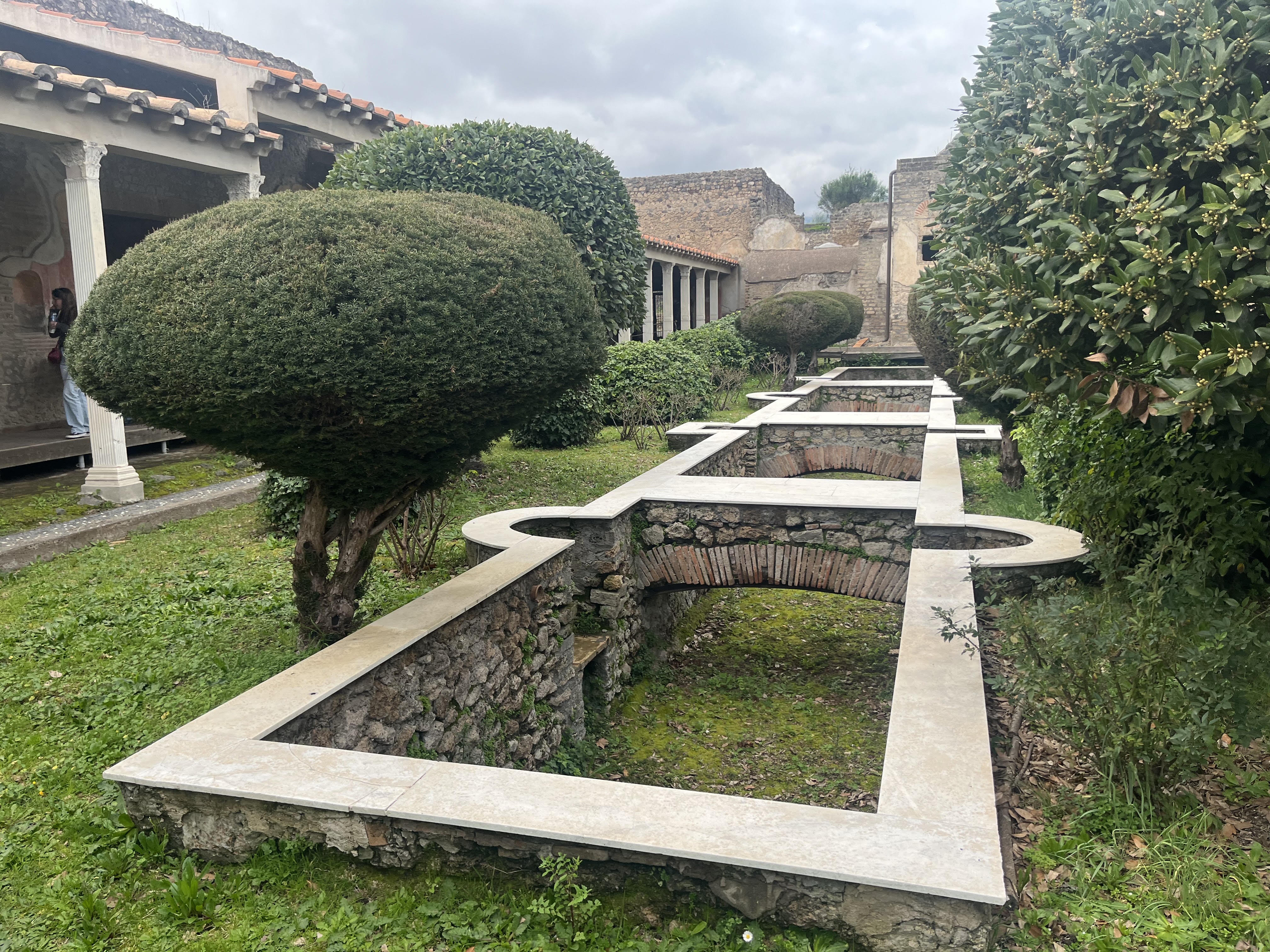
(Figure 1: The gardens in the House of Julia Felix, Pompeii)
The main features of the estate, however, were the baths and gardens. The baths of Julia Felix were adapted into the property after an earthquake in 62CE, and likely saw a great deal of use, due to the closure of most public baths for repair (Nappo 2009, 361). In her description of the baths on the aforementioned advertisement, Julia Felix evokes an image of luxury and civic identity through her reference to Aphrodite (CIL 4.1136) as Pompeii was regarded as the ‘City of Venus’ (Small 2009, 186). The lavish garden space attached to the baths and overlooked by the domus was also filled with elaborate decorations, and even a water feature in the centre intended to mimic a grotto (D’Amra 2021, 92). Parslow (2009, 220) notes the luxury of the baths with the gardens adjoined was intended to appeal to the upper echelons of Pompeian society. It is true that green space in cities was highly desirable and considered a privilege (Jashemski 2018, 61), and this likely contributed to Julia Felix’s success. The creation of a sense of private luxury contributes to a sustained strategy across the space, and again reveals Julia to be a savvy businesswomen.
As mentioned in her advertisement, the upstairs of Julia Felix’s house were made into rental rooms. The layouts of the rented areas were carefully placed to control the intersection between Julia’s personal and business lives, and those of the renters. The entrance to the upstairs rental rooms was placed as to minimise the contact between the occupants and the business associates that would have at times been in the atrium and tablinum of the house (Longfellow 2025, 211). This demonstrates both the control Julia Felix maintained over her enterprises, and the way it intersected with her daily life and physical spaces. The boundaries between public and private space throughout the Roman world were complex and have been extensively debated (see Russell 2016), however for Julia Felix, they were certainly intertwined.
Beyond the businesses she ran, Julia Felix also indicated her position within the Pompeian economy through the ways in which she decorated her estate; namely through her friezes. In the tablinum of the living area, the domus, of the estate, the frieze on the South wall features still life of equipment associated with business; including an inkpot, stylus, pen, papyrus roll, and hinged tablets. Directly across from this, there were still lives of bags of money and piles of coins, showing the importance of finance, literacy, and business to Julia Felix, and implicitly laying out her own transactions (Longfellow 2025, 209). Meyers (2009, 589) characterises this imagery in frescos as 'masculine' and proposes while men could partake literary life, women could only aim to inspire it. However, we have established Julia Felix was an active, independent business owner, as so it would be far more reasonable to view this imagery as realistic, representative illustrations of Julia's day-to-day business life that would have taken place in this room. This is an example of women being direct economic leaders, and challenges the idea they were passive in matters of business.
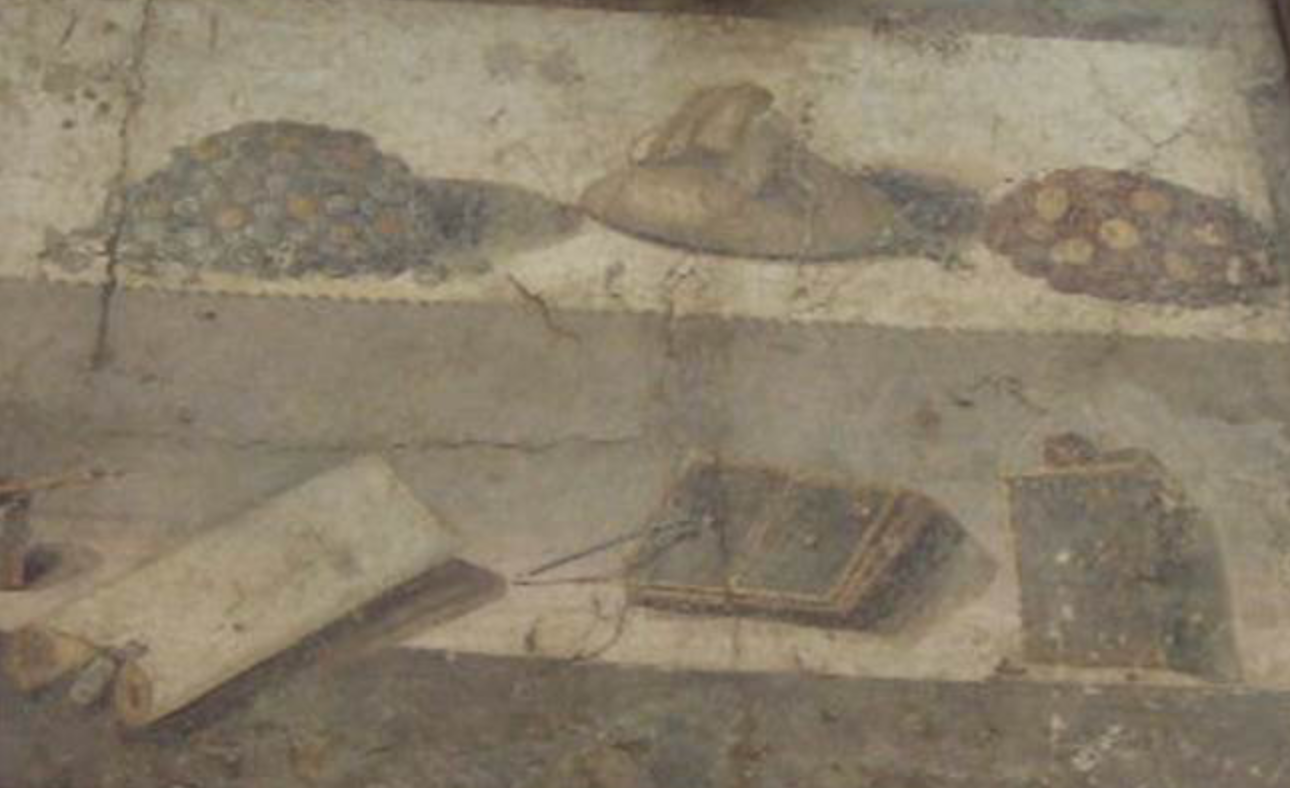
(Figure 2: Fresco from the tablinum of Julia Felix, showing two piles of coins, a bag of money, and writing instruments. Now in the Naples Museum of Archaeology. Image by pompeiiinpictures)
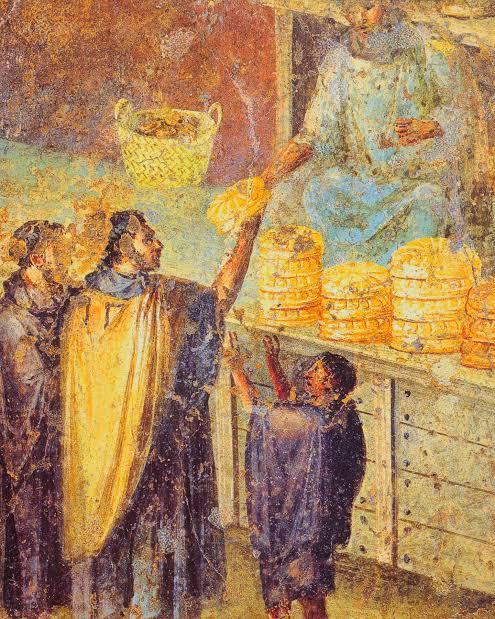
The frieze belonging to the atrium leading into the gardens features a depiction of Pompeians, in their finest clothes, shopping in the Forum. The striking thing about it, though, is the unique sense of equality and diversity across the people depicted; the customers and merchants are largely presented as equals, there is a unusually high number of women represented, and there are no significant displays of wealth (D’Amra 2021, 101). D’Ambra (2021, 102) suggests Julia’s intention here was to highlight all the commercial classes of the Pompeian market, through her focus on the people over the goods, and to present a unique perspective to the Pompeian elite attending her baths. This demonstrates her experience and viewpoint on both the wider economy as well as her place within it as a successful business owner.
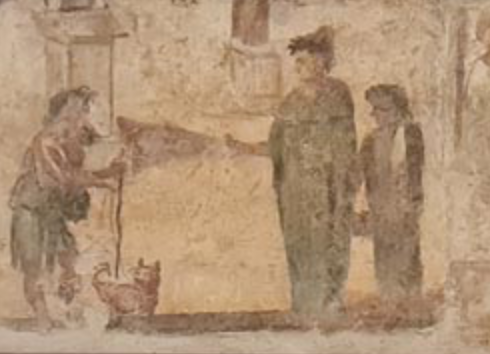
(Figure 3: Part of the 'Forum Frieze' from the atrium of Julia Felix, depicting a woman conducting business. Now in the Naples Museum of Archaeology. Image by pompeiiinpictures)
The conclusion of this evidence together is that Julia Felix was an independent, active, and effective business women directly engaged with the commercial economy in Pompeii. While there have been suggestions that she may have been less independent in her affairs (Olivito 230-4, as cited in D'Ambra 2021, 102), all evidence surrounding her challenges traditional legal and social evaluations of Roman women. She utilised her own private property to create opportunity out of the disaster in 62CE, and actively portrayed herself as first and foremost a businesswoman throughout all areas of her property. While this certainly doesn’t represent the reality of all Pompeian women, it does suggest that women may have enjoyed a degree of economic agency and participation in matters of business in cities outside of Rome itself.
Bibliography
Gaius. Institutes. Translated by E. Poste. Oxford: Oxford University Press, 1904.
D'Ambra, E. (2021) "Real Estate for Profit: Julia Felix's Property and the Forum Frieze." In B. Longfellow and M. Swetnam-Burland (eds.), Women's Lives, Women's Voices: Roman Material Culture and Female Agency in the Bay of Naples. Austin: University of Texas Press, pp. 85–105.
Jashemski, W. (2018) Gardens of the Roman Empire. Cambridge: Cambridge University Press.
Longfellow, B. (2025) The Lives and Deaths of Women in Ancient Pompeii. Austin: University of Texas Press.
Longfellow, B. and Swetnam-Burland, M. (2021) "Introduction: Negotiating Silence, Finding Voices, and Articulating Agency." In B. Longfellow and M. Swetnam-Burland (eds.), Women's Lives, Women's Voices: Roman Material Culture and Female Agency in the Bay of Naples. Austin: University of Texas Press, pp. 1–8.
Mau, A. (1902) Pompeii: Its Life and Art. New York: The Macmillan Company.
Meyers, E. (2009) "Writing Paraphernalia, Tablets, and Muses in Campanian Wall Painting." American Journal of Archaeology 113(4), pp. 569–601.
Nappo, S. (2009) "Houses of Regions I and II." In J. Dobbins and P. Foss (eds.), The World of Pompeii. New York: Routledge, pp. 184–211.
Parslow, C. (2009) "Entertainment in Pompeii." In J. Dobbins and P. Foss (eds.), The World of Pompeii. New York: Routledge, pp. 212–223.
Russell, A. (2016) The Politics of Public Space in Republican Rome. Cambridge: Cambridge University Press.
Small, A. (2009) "Urban, Suburban and Rural Religion in the Roman Period." In J. Dobbins and P. Foss (eds.), The World of Pompeii. New York: Routledge, pp. 347–372.
The author
Undergraduate Ancient History student, with a main area of interest in Roman women!
All work by this author →Read next, in Classics