Literature · Essay · From the archive
The Messy Yet Parallel Succession Claims in House of the Dragon and Mahabharat
The Dance of the Dragons and the Kurukshetra War have more similarities than you would imagine
Adit Chandrachud · 18 September 2026
18 September 2026
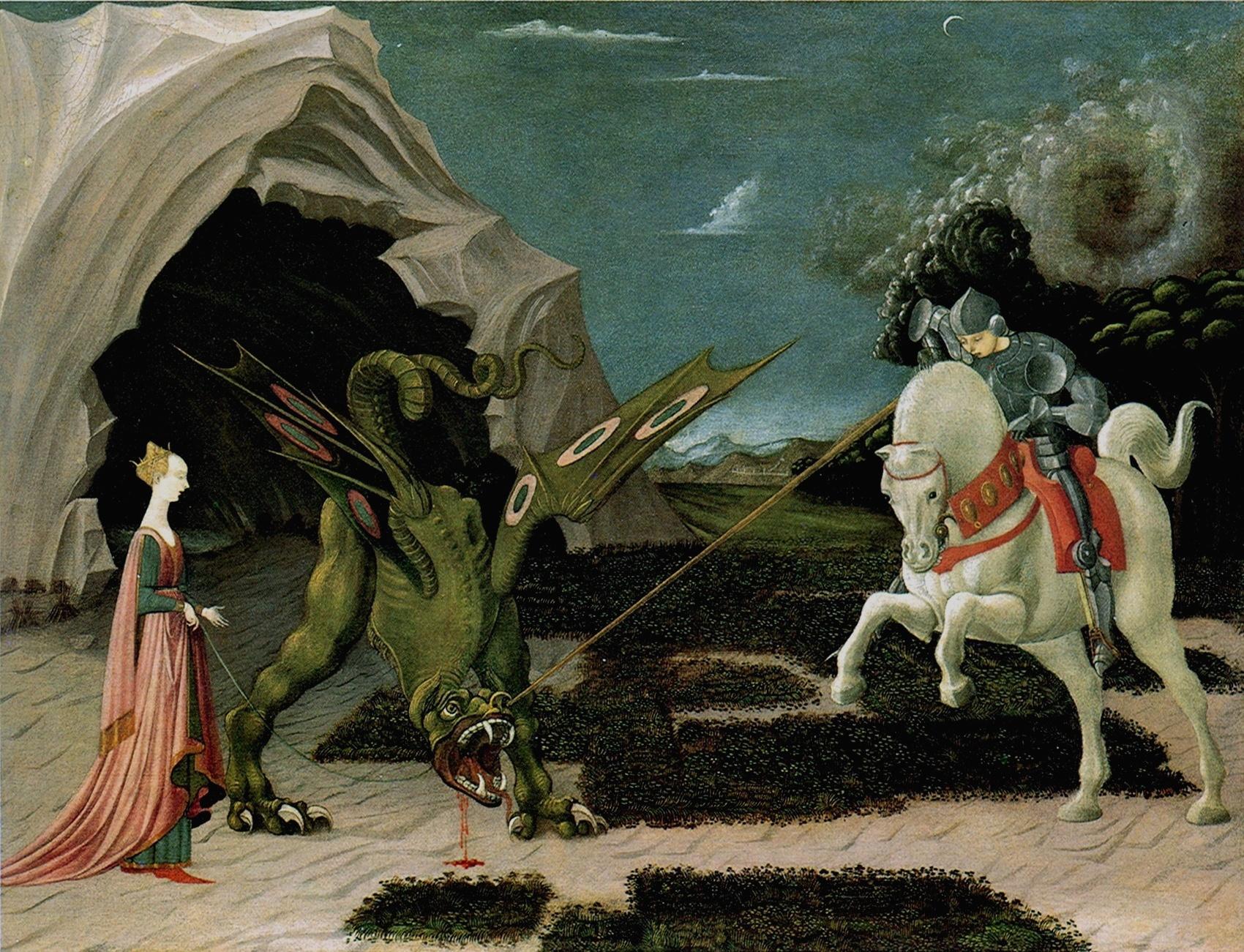
The Dance of the Dragons and Mahabharat — fiction, history, or both?
While many claim that the Indian canon, the epic of the Mahabharat, should be considered no less than foregrounded history, historians, experts, and scholars have found no unwavering proof of its realistic occurrence. Can we surmise that ‘a’ war happened roughly around 3000 BC in the Indian subcontinent? Perhaps.
Does this mean for sure that all of Mahabharat, with its ineffable panoply of fantastical variations, holds veracity? Unlikely. But it wouldn’t be unreasonable to say that Mahabharat surely is fiction inspired by history — it is, today, an exaggeration, with all its flying Asuras (demons) and Sudarshan Chakras (a sharp disk used as a weapon by Lord Krishna) and other touches of fantasy, much like George R. R. Martin’s Dance of the Dragons, which is loosely based on the Anarchy, the civil war fought in England after 1135.
Set three hundred years before the events of the iconic Game of Thrones, House of the Dragon season one aired in August 2022, launching the infamous Dance of the Dragons into motion on screen. The Dance of the Dragons is a historic event in Martin’s fictional realm of Westeros, the civil war fought between Rhaenyra Targaryen, the eldest daughter of Viserys, the ruling king, and Aegon Targaryen, her half-brother, the first male heir of Viserys. By the end of the Dance, dragons are wiped off the map and the decline of the Targaryen dynasty begins. The events in House of the Dragon, spanning over four seasons, may be fictional, but certainly draw from history, myth and philosophy. The world is built around complex anthropological concepts, such as eugenics (pure Valyrian blood), inbreeding for purity, distinct languages for the enhanced ruling class (High Valyrian, a language constructed by the creative team from scratch with its own syntax, etymologies and more) and meaningful symbolism (dragons as perhaps nuclear power), much like Mahabharat, which is a treasure trove of Indian political philosophy.
The debate over whether the Mahabharat is history or mythology has raged for centuries — not just because it’s tied to cultural identity, but because its blend of myth and “magic” keeps blurring the lines between fact and fiction. For the sake of argument, I prefer to see these epics as fiction inspired by history. The Mahabharat, in particular, stands apart as an epic so vast and recursive, it almost defies genre-fication. In exploring it, I’ll lean on a few “scientific” interpretations (historically plausible perhaps) to draw modern parallels — but mostly to highlight the irony that this legendary tale is, at its heart, a dramatised and embellished version of history, designed to draw in cultural, literary, and spiritual audiences alike. Finally, I will argue that despite being years apart from one another, and geographically so distant in terms of origin, language, history and more, both these texts, unquestionably impactful in popular culture, and dissected thoroughly, have uncanny similarities that are perhaps pointing us in the direction of certain truths, about what makes good, memorable fantastical-historic fiction, and why that appeal is undying.
Duryodhana, the Kauravas and Team Green
Many claim that Duryodhana and Aegon were usurpers and have no claim to their respective thrones; however, I think there is a firm case that can be built in their name. Two parameters need to be weighed. The first is the law, the tradition, what the dharma says, and then it is a question of merit. While ‘dharma’ in Mahabharat does allude that the one who is most capable and beloved amongst the masses should be given precedence to inherit the throne, the patrilineal Primogeniture, the system of inheritance from father to son, was prevalent in both the realms. While progressive modern minds would argue that Primogeniture is a flawed system of inheritance, the realms in question believed in the patriarchal regime of succession, and it was the unwavering foundation of their administration that kept the realm united, prosperous, and in a fraternal harmony.
The feminist critique of Primogeniture remains a different subject altogether. In both realms, he who transgressed the dharma was a traitor, and the conservative pyramids of administration that were fruits yielded from centuries of human knowledge rested on the fidelity and tenacity of those who vowed to honour the ways of men.
Starting with the rather simple case of Aegon II, the Westerosi nobility was accustomed to patrilineal Primogeniture and was not forward-minded enough to be ruled by a woman. While I see how that comes off as misogynistic, what I intend is not misogynistic at all, but rather the sad truth about women in Westeros, which one cannot gainsay. Rhaenys Targaryen puts it beautifully in the second episode of the first season when she gives a younger Rhaenyra a reality check.
“Men would sooner put the realm to the torch than see a woman ascend the Iron Throne.” — Rhaenys Targaryen (House of the Dragon, Season 1, Episode 2)
The men in Rhaenyra’s black council, and Daemon as well, provide perfunctory support to the Queen on account of her female birth. Despite pledging themselves to Queen Rhaenyra, they were never far-sighted enough to understand the consequences of the patriarchal corrosion and always tried to claw for power, unafraid of Rhaenyra’s femininity, and sceptical of her ability to plunge into bloodlust for the greater good of the realm. And thus the argument that Aegon’s claim is stronger by virtue of his being the male heir and bringing peace, unfortunately, holds ground. Though Aegon was an incompetent fool, the Green council chose to support a feckless man over a benevolent woman.
The second, and more sound, argument against Rhaenyra is that of her progeny. Who is to ascend the throne after Rhaenyra? To be considered as a potential heir, Westerosi tradition required the ruler to have multiple capable heirs, and Jace, as the entire realm would second, was not a legitimate offspring. This transgression cannot be turned a blind eye to and is most certainly an abomination, ‘an insult’, as Alicent puts it, in the eyes of the law. Aegon, on the other hand, did father a pure-blood Targaryen boy, which, in the eyes of the realm, strengthens his claim to the Iron Throne.
The third and the weakest argument against Team Black is that of the genuine misunderstanding birthed by Queen Alicent Hightower and aggravated by Otto Hightower about Viserys’s last words about Aegon (the Conqueror and not their son); an obvious plot complication. Should Viserys have truly meant to put Aegon, his son, on the throne, in his final moments, Rhaenyra’s claim would have stood no chance.
What was Duryodhana’s argument?
The big bad guy from Mahabharat had some sound reasoning after all. Duryodhana’s argument largely attacks the legitimacy of the birth of the Pandavas and thus the end of Pandu’s bloodline. When Pandu, the younger of Hastinapur’s two royal princes, ascends the throne as the elected heir, because of his elder brother’s disability, he officially secures the claim to the throne. However, after being cursed by Rishi Kindama, Pandu exiles himself, and Dhritarashtra is named Regent. Now here is the tricky part. Pandu’s curse is such that should he approach his wives with the intent of making love, he would die, as he does when he tries engaging in a physical act of passion with Madri. This makes it clear that Pandu can’t have heirs of his own, which means the next generation of the royal line takes precedence, in keeping with Dharma’s strict rules about bloodlines.
Therefore, Duryodhana’s claim that the Hastinapur throne belongs to Dhritarashtra’s son (himself) stands to reason. This is a similar argument to the one against Rhaenyra, who was also unable to produce pure heirs out of her legal marriage. However, the difference is that Jace and Luke are surely the flesh and blood of Rhaenyra, who is directly in line to the throne, regardless of who their father is — but the Pandavas are not the sons of the King, Pandu, just the sons of their mother, Kunti (and Madri), who is the King’s spouse, not the ruler herself.
As Vaemond Velaryon puts it, the Pandavas, like Jace and Luke, are bastards according to Duryodhana, and Team Green and the Kauravas wish to toe a party line. The more scientifically realistic, pragmatic and thought-worthy explanation for the birth of the Pandavas, rather than that Kunti drank a magical potion due to her varadan or that she could magically get pregnant by the blessings of Gods, is this:
In the Kannada novel ‘Parva’, a more philosophical and socially stimulating retelling of the Mahabharat, author S. L. Bhyrappa narrates a different tale. In this version, Pandu and his wives travelled far up north into an abode beyond human civilisation where they came upon a genetically superior race of humans. In Bhyrappa’s telling, these humans were called ‘Devjana’ and are also alluded to as the purest Aryans, with 32 clans, and remained in the purest form of human excellence and were like demi-gods (just like the Blood of Old Valyria), in terms of complexion, intelligence, and physique. They were secluded from the humans living below on the flatlands and were philosophically far more progressive. It was there that, with Pandu’s consent, three men biologically impregnated Kunti — an honourable man, the religious leader of a clan (because Kunti and Pandu required a son who could lead and rule), a strong man, the head of the army (a son who could fight in battle and aid his brother), and finally it was Indra who offered his seed as a gift to the couple and Arjuna was born (a different version surmises that Indra, who was the head of this genetically superior clan, had a lustful eye towards Kunti, which adds up considering his infamous character in mythology and lore).
If this version of events is to be accepted in all veracity, genetically, the Pandavas are not from the Kuru bloodline, and thus have no claim to the throne — is what Duryodhana essentially says.
From the pages of the English translation of Bhyrappa’s ‘Parva’ by K. Raghavendra Rao, Yuyudhana’s (Satyaki) internal monologue about the contention of inheritance is most poetic. He says:
He recalled with a jolt that he himself had held implanting of a foreign seed to be a sin. Wasn’t it because Kamsa was born of the alien seed of Draumila that he oppressed the entire Yadava clan? An alien seed is like a crow’s egg in a nest of nightingales. Then did it follow that the Pandavas were born to destroy the Kuru lineage?
Another argument from Duryodhana himself, as he quotes in the novel, is about the legal recognition of the practice of Niyoga (consensual fathering of children by other men) by Dharma, but how Kunti’s choices are deemed unlawful.
It is said that her sons were born through the Niyoga practice with her husband’s approval. Yet one thorny issue arises out of this. If there had to be Niyoga, why go all the way to the far-off Himalayas? Why, instead of getting done through upright Brahmins or husband’s brothers, did she have it done through outsiders, that too barbarians from the mountains? Even let that be. Niyoga is done as a rule to produce one son so that the lineage does not cease. Pandu had three children, through Kunti, one after another, and additionally the twins through his second wife through Niyoga. There was this impotent and seriously sick husband, and here was this wife producing children. Well, you draw your inference. You tell me who is the rightful heir to the Kuru lineage.
Arguments in favour of Rhaenyra Targaryen:
i) She was named heir by Viserys in front of the whole realm — The most concrete and unflinching proof of Rhaenyra’s legitimacy is her proclamation ceremony, headed and sealed tight by the former King, Viserys Targaryen. Viserys proactively went out of his way to set aside Primogeniture and name his daughter the heir; partly because he felt that he had wronged her by murdering her mother and marrying her best friend, overwhelmed by the guilt of his hankering to have a ‘son’, and partly because of the Song of Ice and Fire — the dream of Aegon the Conqueror who passed down the secret of the ‘Prince that was Promised’ — something that led Viserys to believe that from Rhaenyra’s blood comes the Prince That Was Promised.
This argument really works in Team Black’s favour — especially since Viserys’s word wasn’t fickle. He was a beloved ruler. His word carried enough weight to override tradition and compel men to spill blood for the Queen he named heir.
ii) There is technically no proof that Jace is a bastard — The most dangerous argument that puts Team Black in peril is that of Jace’s inheritance. The sole speculation of Jace’s scandalous parentage is his black hair, not an actual DNA test. In an argument with his mother in the seventh episode of the second season, Jace, who is understandably upset, argues that the only shield he has against the accusations of his legitimacy is that he can ride a dragon and is, after all, a carrier of Targaryen genes, thus somewhat secure in his position in Westerosi politics. Alicent keeps bringing up Rhaenyra’s transgressions, and Viserys keeps sweeping it under the carpet in hopes of selling the pitch of Jace’s ‘pure’ genetics because he calculates, much like Rhaenyra, that nobody can prove legitimately, unless a direct witness shows up, that Jace is a bastard. And when Rhaenyra and the Blacks come into power, nobody would dare question them, and all shall be fine — a not-so-stupid plan of action considering Rhaenyra’s muddled predicament.
Arguments in favour of the Pandavas:
i) Niyoga, consensual fathering of children — Essentially Kunti’s defence; that she never ‘cheated’ and whatever transpired was with the willingness of her lawful husband and thus within the legal ambit of the ‘Dharma’ (unlike with Karna, who was the progeny of Kunti and Rishi Durvasa, according to the non-magical retelling). Similar to the handshake under the table between Laenor and Rhaenyra, Kunti and Pandu see eye to eye about their unfortunate condition, and to respect the onus of the Throne, they make the crucial decision of accepting the Devjana’s proposal. This essentially means that the children, though biologically not Pandu’s, are legally his, and thus are rightful heirs to the Throne, superseding Dhritarashtra’s children’s claim.
ii) Yudhishthira was older than Duryodhana — Another bullet point in the Primogeniture remains the ‘eldest’ son’s precedence, something that is the undercurrent of Aemond Targaryen’s conflicting arc in the second season of House of the Dragon. Duryodhana is said to be born almost a year after Yudhishthira, thus making Yudhishthira the eldest Kuru brother in the generation, a brownie point that mustn’t be ignored.
iii) Yudhishthira had proven himself to be the better man — A rebuttal that is still weak in the Dance of the Dragons but pertinent in Mahabharat is that of merit. The Dharma does say that he who is more learned, virtuous, and beloved must prevail. It was no secret that Yudhishthira, the Dharmaraj, was truthful and righteous in every sense and had the moral upper hand when juxtaposed against Duryodhana’s over-ambitious and covetous personality. He was better suited to be King, and there is little debate about who would have brought more prosperity to the realm.
iv) According to Duryodhana’s logic, then, even Pandu and Dhritarashtra are illegitimate, which makes him illegitimate as well — A most ironic, almost hilarious fact that could blow up in Duryodhana’s face was that of the parentage of his own father and uncle. The male Kuru bloodline ended when Vichitravirya died childless, leaving Ambika and Ambalika widowed. The story of how Dhritarashtra and Pandu were born, like many other stories in the Mahabharat, remains obscure. Whether they were born by Vyasa’s ‘magic’ or whether he impregnated them biologically is insignificant, considering they were, without question, not ‘Vichitravirya’s sons’. As far as patrilineage is concerned, according to Duryodhana’s logic, the entire dynasty is illegitimate, and in that case, no one should be heir. Thus, his argument against the patrilineage of the Pandavas is as good as null.
Concluding as a story-lover
We humans can’t resist a good story — especially one studded with regal theatrics and a tinge of forbidden desire. From Oedipus Rex to A Midsummer Night’s Dream, the classics have always toyed with lust, lineage, scandal, and the tangled web of families. Sex, after all, is a storytelling fuel — it’s where biology meets mythology, where dynasties rise and fall, and where writers like me find fertile soil for planting those literary seeds.
Whether Mahabharat is myth or memory, or whether Rhaenyra’s claim to the throne requires a feminist analysis, are the exact sort of open-ended questions that keep speaking to the success of these stories. What I do know is that both tales — the Dance of the Dragons and the Mahabharat — evoke something timeless: that heady mix of entertainment, identity, power, history, and emotion that reminds us why we keep coming back to the chaos of being human.
Bibliography
Bhyrappa, S. L. (2020). Parva (K. Raghavendra Rao, Trans.). Sahitya Akademi. (Original work published 1979)
Read next, in Literature
- A Minute's Life Cindy Ouyang
- Daughter of the Earth: Sita's Refusal in Sita's Ramayana Rhea Jaggi
- The rains come again Max Geffin